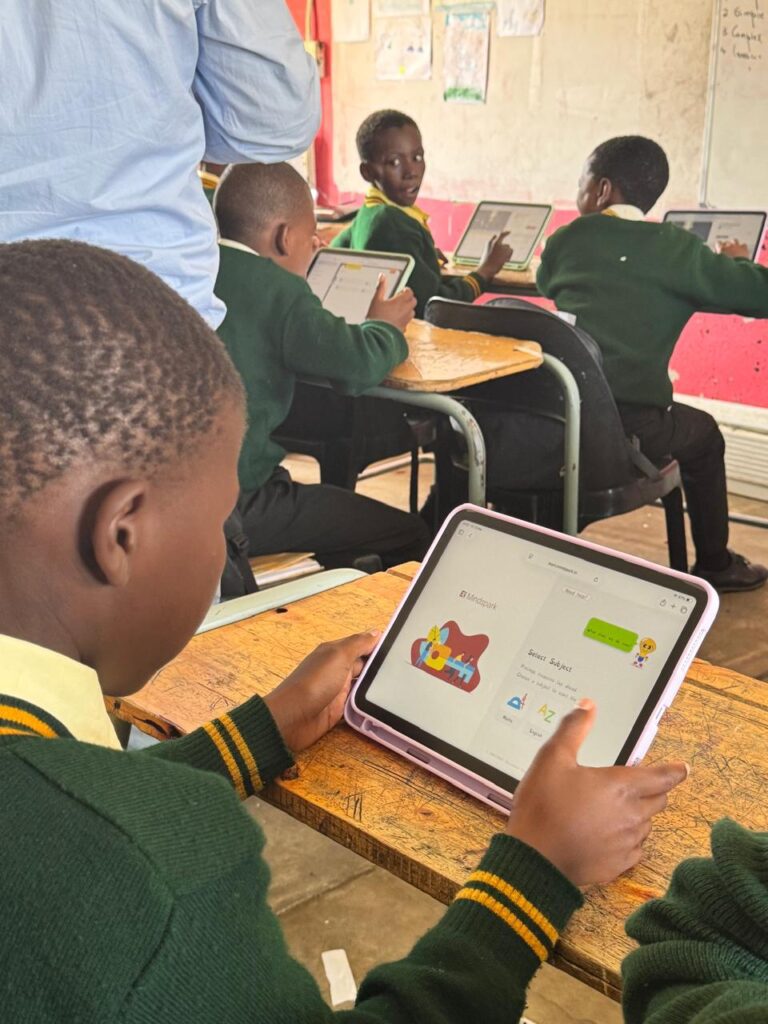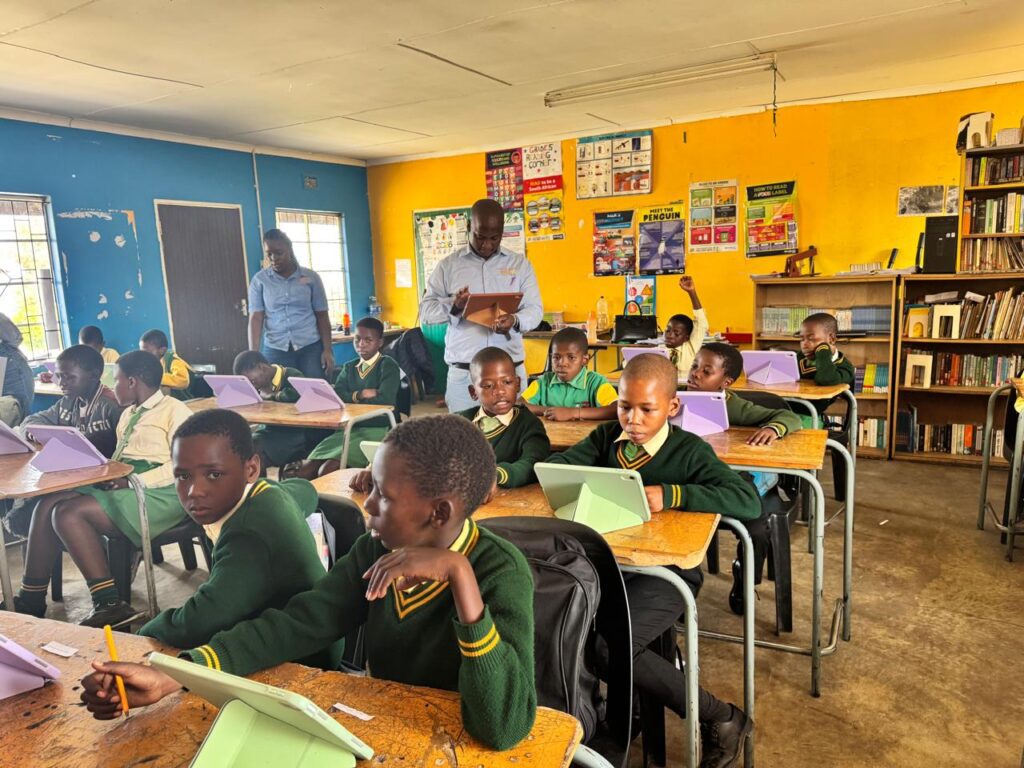
KHULA Education is pleased to announce the launch of a new Mindspark pilot at Amoibe Primary School, delivered in partnership with the Edutech Institute. This pilot forms part of our wider commitment to strengthening Maths and English outcomes in rural classrooms through the careful and considered use of digital tools.
Mindspark is an AI-powered learning platform designed to adapt to each learner’s individual level. In many classrooms, teachers are working with large groups of learners who have varying levels of understanding. Mindspark responds to this challenge by identifying gaps in knowledge and adjusting content in real time, allowing each learner to progress at a pace that suits them. This personalised approach supports both confidence and comprehension, particularly in subjects like Maths and English where strong foundations are essential.
The pilot is currently underway at Amoibe Primary School, where 63 learners are participating, supported by a team of 12 educators. The focus of this first term is to test the programme carefully within a rural classroom context. This includes understanding how the platform functions in practice, how it can be integrated into existing lessons, and how learners engage with this new way of learning. Taking the time to learn and adapt at this stage is critical to ensuring that any future rollout is both effective and sustainable.
This work sits within a broader challenge facing many of the communities KHULA serves. Learners are growing up in a world where digital skills are increasingly essential, yet access to technology in the classroom remains limited. Without this exposure, gaps in both subject understanding and digital literacy can widen over time. By introducing structured digital learning in a supported way, KHULA is working to ensure that learners in rural KwaZulu-Natal have access to the same opportunities to engage with technology as their peers elsewhere, and that these tools are used to strengthen learning rather than distract from it.
Following the pilot phase, the programme will expand significantly. From Term 2 through to the end of the 2026 school year, Mindspark will be rolled out across six primary schools, reaching 553 learners in Grades 5 and 6. This expansion will build on the lessons learned during the pilot, with a continued focus on teacher support, practical implementation and long-term integration into classroom practice.